Shockwave Therapy in Croydon
It’s Not What You Think—And It Might Be Exactly What You Need
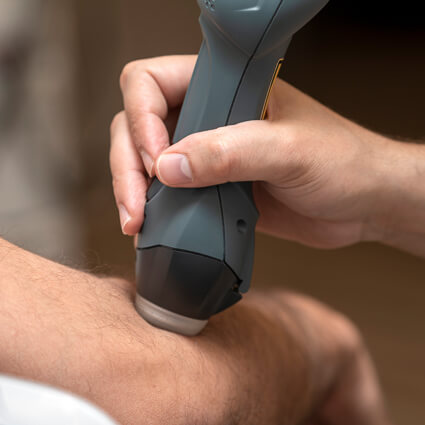 Let’s address the elephant in the room: the name “shockwave therapy” sounds intimidating. Many people hear “shock” and immediately think of electric shock treatment, imagining something painful or invasive. Here’s the truth: shockwave therapy has absolutely nothing to do with electricity or electric shocks. It’s a focused, high-frequency mechanical treatment that uses sound wave pulses to stimulate your body’s natural healing processes. Think of it as a very advanced, very fast, intensively focused massager—because that’s much closer to what it actually is.
Dr. Roddy Knight, chiropractor, recently added this cutting-edge therapy to Croydon Sports Injury Clinic Ltd after extensive continuing professional development, careful research, and thorough personal testing. This isn’t a trendy gimmick—it’s an evidence-based treatment modality that’s particularly effective for stubborn soft tissue injuries that haven’t responded adequately to traditional approaches alone.
How Shockwave Therapy Actually Works
The shockwave device delivers rapid mechanical pulses to targeted tissues—tendons, muscles, and areas of restriction. These controlled pulses create several beneficial effects in your body. Blood flow to the treated area increases significantly, bringing fresh oxygen and nutrients that support healing. The mechanical stimulation breaks down scar tissue and calcifications that may be preventing proper tissue function. Your body responds by initiating enhanced regeneration and repair processes. Inflammation decreases while tissue quality improves.
Conditions That Respond Well
While shockwave therapy can benefit various soft tissue problems, it’s especially effective for tendinopathies—inflammatory conditions affecting tendons. Tennis elbow (lateral epicondylitis), Achilles tendonitis, patellar tendonitis (jumper’s knee), and plantar fasciitis often respond remarkably well to shockwave treatment. These are conditions where the tendon has become chronically inflamed or even partially degenerated, causing persistent pain that limits your activities.
You might also benefit from shockwave therapy if you’re dealing with chronic muscle restrictions that aren’t responding to massage alone, joint restrictions that need additional intervention beyond adjustments, or calcific deposits that have formed in soft tissues. The key word here is “chronic”—if you’ve been struggling with the same injury for months despite other treatments, shockwave therapy might be the missing piece in your recovery puzzle.
What to Expect During Treatment
Shockwave therapy sessions are relatively quick but notably effective. Subsequent treatment appointments are typically 15 minutes, though double appointments can be scheduled when you need more comprehensive care or you’re in acute pain and require additional time for soft tissue work or other therapies. During the shockwave portion, you’ll feel the rapid pulsations being delivered to the affected area. Some people describe a tapping sensation; others feel it as intense pressure. The treatment can be somewhat uncomfortable in the moment—we won’t lie about that—but it’s brief and tolerable.
After treatment, some patients experience temporary soreness similar to post-workout muscle soreness. This typically resolves within a day or two. The therapeutic benefits, however, continue developing for days and even weeks after each session as your body’s healing response progresses. Most conditions require multiple sessions for optimal results, but many patients notice meaningful improvement after just the first or second treatment.
What Our Patients Say
-
 He treated me over a few weeks and suggested exercises … arm, shoulder and neck improved.
 -
Fantastic service with immediate benefits.
Frequently Asked Questions
What conditions respond best to this treatment?
How soon will I feel results after a session?
How many shockwave sessions are usually needed?
What should I expect during and after treatment?
Can shockwave therapy treat chronic tendon pain?
Is there downtime or recovery needed after each session?
Can shockwave therapy be combined with chiropractic or massage?
Schedule Your Appointment
Struggling with chronic tendon pain that won’t resolve? Call Croydon Sports Injury Clinic Ltd today to discuss whether shockwave therapy combined with Dr. Roddy Knight’s comprehensive multimodal approach could help you finally heal. Two convenient locations in Croydon: South Croydon and at the Wing Yip Centre.
